When Iron Maiden played soccer — and Indy Eleven won the marketing game.
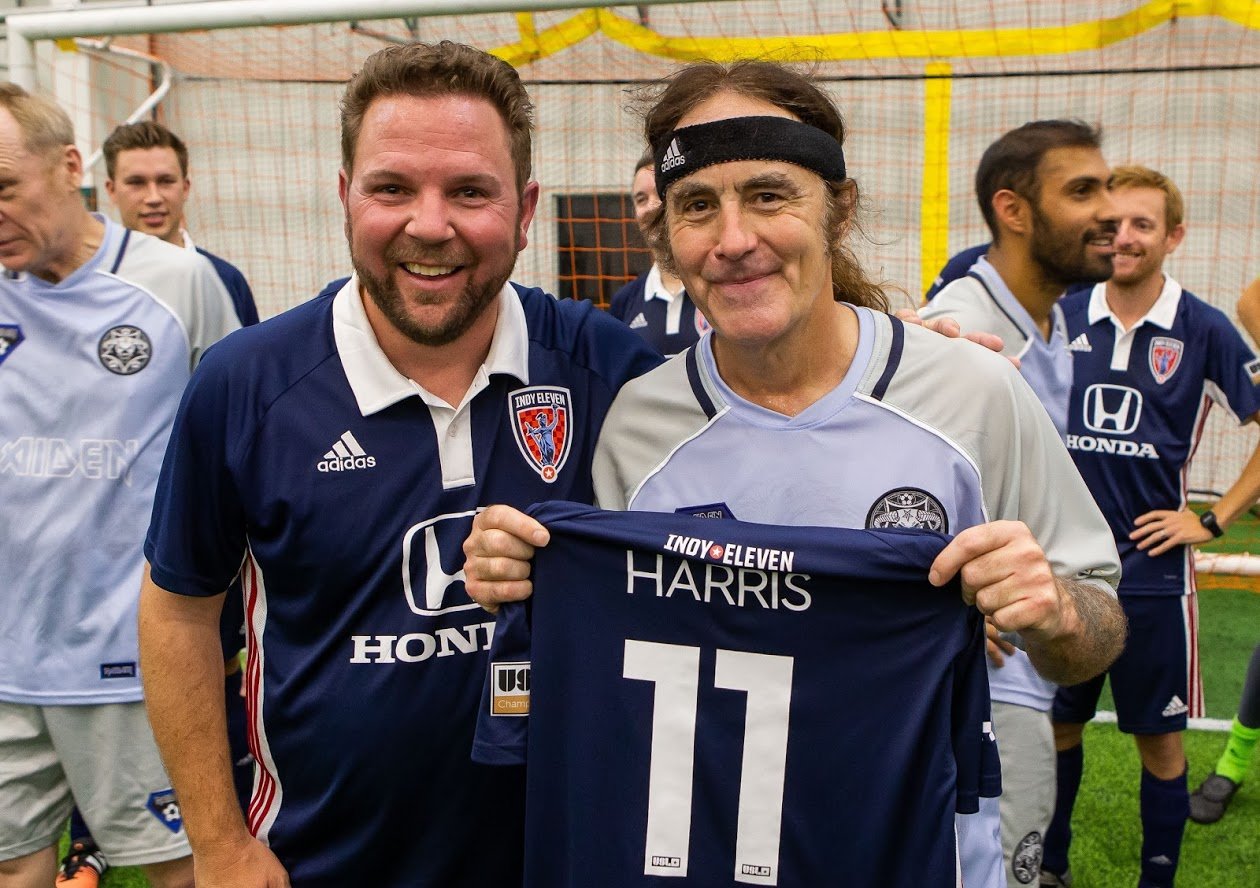
No tickets. No broadcast rights. No formal campaign. But we did have full uniforms.
The moment most people saw as "just for fun"
On the surface, this was simple. A touring band. A local soccer club staff. A casual match before a show.
No tickets. No broadcast rights. No formal campaign — but we did have full uniforms. Just Iron Maiden and their touring staff and internal staff from Indy Eleven kicking a ball around.
But if you understand attention, PR and brand architecture, this wasn't casual at all.
What was actually happening
Iron Maiden has a long-standing internal tradition: they travel with their own football team and play matches in nearly every city on tour. This is not new. This is not random. It's ritualised brand behavior.
So when they played Indy Eleven staff, something powerful happened:
- A global entertainment brand intersected with a local sports brand
- A private moment became public content
- A shared passion became a shared audience bridge
No ad spend. No media buy. Just perfectly aligned attention.
Why this is an elite attention strategy
Most brands try to create moments. The best brands recognize and elevate the moments they already have. This worked because it hit three high-value layers at once.
1. Authenticity — zero-friction attention
Nothing about this felt forced. Iron Maiden actually plays soccer on tour. Indy Eleven staff actually care about the sport. The setting actually existed.
That matters, because modern audiences filter out anything that feels scripted, overproduced or transactional. This felt like a behind-the-scenes discovery — and that's where attention lives today.
2. Cross-audience expansion
Two fan bases that don't normally overlap suddenly shared a story. Association builds perception faster than messaging ever will.
3. Inevitable coverage
A recognisable global name, a local hook, a genuine story and visual content — that's everything media needs. Coverage becomes inevitable rather than requested.
The brand layer most people miss
This wasn't just a cool moment. It reinforced brand truths on both sides.
For Iron Maiden: it reinforced discipline, camaraderie and routine. It showed they are more than performers — they're a culture. And it deepened fan connection through access.
For Indy Eleven: it positioned the club as culturally relevant beyond soccer, aligned us with global entertainment rather than only local sport, and signalled credibility and access.
This is critical: you can say you're relevant, or you can be seen next to relevance.
What an attention strategy actually looks like
Most organizations think attention strategy means louder marketing. It isn't. It's identifying moments that already have energy, authenticity and story — then amplifying them correctly.
Structured intentionally, this becomes a repeatable model: music and sport, touring and local markets, culture and community. Photo and video content, behind-the-scenes access, staff perspectives. Native social storytelling, earned local media, partner amplification. Then a recurring series across tour stops and cities, with fan engagement built in.
Why this matters for your strategy work
If you're building events, sponsorships or experiential marketing, this is the exact layer that multiplies value — because attention is what makes everything else work harder.
Without it, sponsorships feel flat, events feel transactional and content feels disposable. With it, everything compounds.
So the questions to ask are: what already happens here that we haven't noticed? And where are the real overlaps, rather than the forced partnerships?
Final thought
The Nickelback banner helped perpetuate a fun rivalry. This created something different. No gimmick. No punchline.
Just two brands meeting at the exact intersection of authenticity, timing and shared identity — and turning it into attention.
That's the game.
Compete for the person, not just the category.
The better question isn't "how do we beat another team?" It's "why should this experience win tonight?"
